“Nijdra keeps changing, that is the one constant”
“Nijdra keeps changing, that is the one constant”
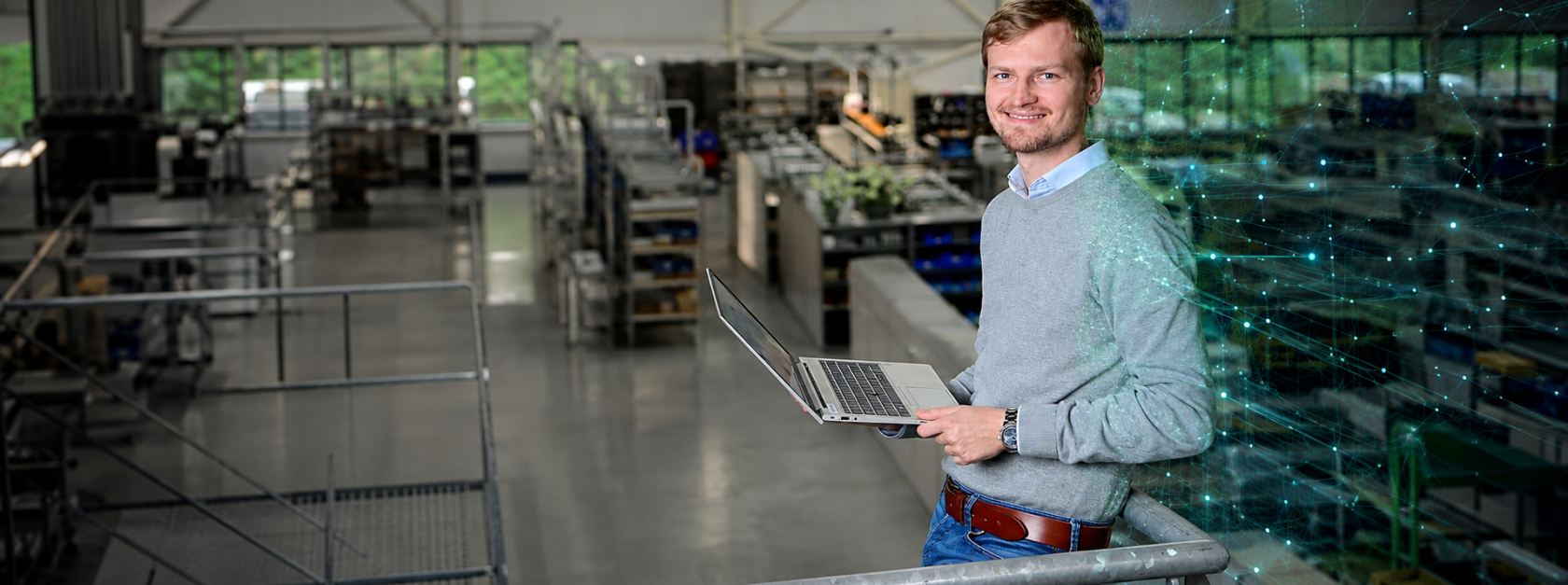
Anyone walking through the hallways at Nijdra will see a family-owned company that is firmly rooted in tradition, while at the same time looking ahead to the future. Where desks were once covered with stacks of paper orders, drawings and forms, laptops have taken their place and digital processes now bring structure. Processes have become faster, errors have been reduced, and collaboration with customers and suppliers has become much closer. At the heart of this change is Koen Zuidema, Change Manager at Nijdra, with a fresh, forward-looking perspective and a strong passion for process optimisation.
Can you start by explaining what exactly you do at Nijdra?
“I’m a Change Manager and I work on process optimisation in the broadest sense. That can be here in the office, in our operations department, but also in production, such as the CNC factories or assembly. My job is to look at where processes can be made smarter and more efficient. I also look at the role AI can play within our processes; where it genuinely adds value, which activities it can support and how we can use it responsibly. That ranges from connecting applications to improving workflows and processes. One of the things I’m particularly focused on right now is how we can make product data flow safely and automatically through every step of the process, from the customer to the engineer, from the programmer to the operator and the quality department. Ideally, without people having to manually transfer data each time and with as few separate information carriers as possible. That saves time, reduces errors and makes our work more reliable.”
What developments do you see in your industry that will shape Nijdra’s future?
“The key is that we need to keep investing in innovation, both in our machine factories and in assembly. Data is also crucial. You need to have your data properly organised before you can start connecting systems. We’re already taking steps in that direction. One example is our collaboration with Bossard, a partner that supplies fasteners. They use a system where components are stored on weighing scales. As soon as stock is used, a signal is automatically sent to their system and the stock is replenished. That kind of integration saves us a lot of time and helps prevent errors. We’re now also running a pilot project in which their hardware and software help support assembly operators with smart work instructions. The system follows what is happening, checks whether bolts have been tightened correctly and automatically records quality data. This creates a link between engineering, execution and quality control. The result is a chain in which less and less needs to be done manually and where you have much greater control over the process. At the same time, we are actively exploring what AI can do for our processes. For example, we’re working with Imnoo, which uses AI to make the preparation and costing of machining work smarter. But we’re also looking at AI more broadly. We ask ourselves; could we eventually build our own applications that are specifically tailored to our processes? At this stage, we are mainly exploring where the technology can really add value.”
That sounds like a major step in digitalisation. How far do you want to take it?
“I think we should aim for full integration, not only internally, but externally as well. Internally, that means connecting all the software within the company so information flows automatically from one system to another. Externally, it means creating similar connections with customers and suppliers. Instead of having to call or email someone for forecasts or planning information, you could access that information in their system through your own. That brings you much closer to the customer, allows you to respond more quickly to changes and reduces the risk of errors. The goal is for information to move safely, synchronously and automatically throughout the entire chain. And once that foundation is in place, it also creates many more opportunities for things like AI agents.”
How do you make sure you get the timing right, not too early, but not too late either?
“That’s the challenge. I often use the metaphor of the bow wave of a ship. If you can move with the bow wave of innovation, you can gain a lot of speed with relatively little effort. If you’re just behind it, you have to work much harder to catch up, while your competitors may already have an advantage. But if you’re too far ahead, you’re creating the bow wave yourself. Then you risk investing time and energy in developments that others may simply benefit from later. So the key is to stay right on that wave. That means constantly looking around you, attending industry events, listening to customers and suppliers and trying to understand where developments are heading. That way, you’re not too early, but certainly not too late either.”
AI is being talked about everywhere. What does it mean for your work?
“AI may well be the biggest change in our industry right now. I see it in two ways. On the one hand, AI can help us interpret data more effectively and make better decisions based on it. Imagine a data warehouse that brings together information from different systems. AI can quickly identify patterns and connections in that data and potentially even carry out actions autonomously within predefined boundaries. On the other hand, I see AI as a kind of personal assistant for every employee. Small, repetitive tasks, such as checking product information or manually entering long lists, can be handled by AI. That leaves people with more time and energy for the creative side of their work and for the things they’re really good at. We now also have an AI engineer who helps us turn these ideas into practical steps. It may still sound slightly futuristic, but this is becoming very real.”
Some people are worried that AI will make jobs redundant. What is your view on that?
“I understand the concern, but I don’t see AI as a threat. I actually think it can make our jobs more enjoyable. Take an engineer, for example. An engineer wants to design, create sketches and work in a 3D environment. They don’t want to spend their time entering a hundred part numbers into a bill of materials. So let AI take care of that. That gives the engineer more room to develop, deepen their knowledge and focus on creative work. That benefits the employee, but it also benefits Nijdra. The more expertise we have in-house, the better we can serve our customers and the more markets we can potentially enter.”
What kind of people thrive in a culture where innovation is continuous?
“It differs from role to role, but there is one quality that matters for everyone; a willingness to change. You need to enjoy the fact that things keep evolving. It’s about continuous learning and keeping up with developments. What you know today may already be outdated tomorrow. If you enjoy that kind of environment, you’ll fit in well here. And that’s not only true for Nijdra, it applies to the manufacturing industry as a whole. The pace is high, and you have to keep moving with it.”
Nijdra is a family-owned company. How do you combine that culture with innovation and technology?
“Being a family-owned company actually allows us to move faster and innovate more flexibly. We have a flat organisation and short lines of communication. That encourages creativity and collaboration. Projects are always approached from a multidisciplinary perspective, so you regularly work with people from other departments. That creates diversity and brings in fresh ideas. The family culture also means we encourage each other and keep each other sharp. So the two are not in conflict at all. In fact, I think they strengthen each other.”
What role does sustainability play in your work?
“A very important one. For me, process improvement and sustainability are closely connected. Every form of waste you eliminate is a gain. For example, we have completely moved from paper-based reporting to dashboards. We use returnable packaging and, in some cases, refurbish older customer systems instead of producing everything from scratch. That is sustainability too. Together with our customers, we look at how we can work smarter, more efficiently and more sustainably.”
Looking ahead, what do you think Nijdra will look like in ten years?
“We’ll still be a family-owned company, but I expect we’ll be able to serve an even wider range of markets. Partly because of technological developments, our customers’ expectations are becoming increasingly demanding. That means we need to keep developing ourselves, build new expertise and find new applications for what we’re capable of. That’s how we can continue to support our customers in the future, and I also expect those developments to open the door to new markets, while always staying true to the same values. One thing I do know for certain: Nijdra will keep changing. That may be the only constant I can confidently predict.”